MENSTRUATION AND YOUNG GIRLS: WHEN THEY LACK PROPER EDUCATION
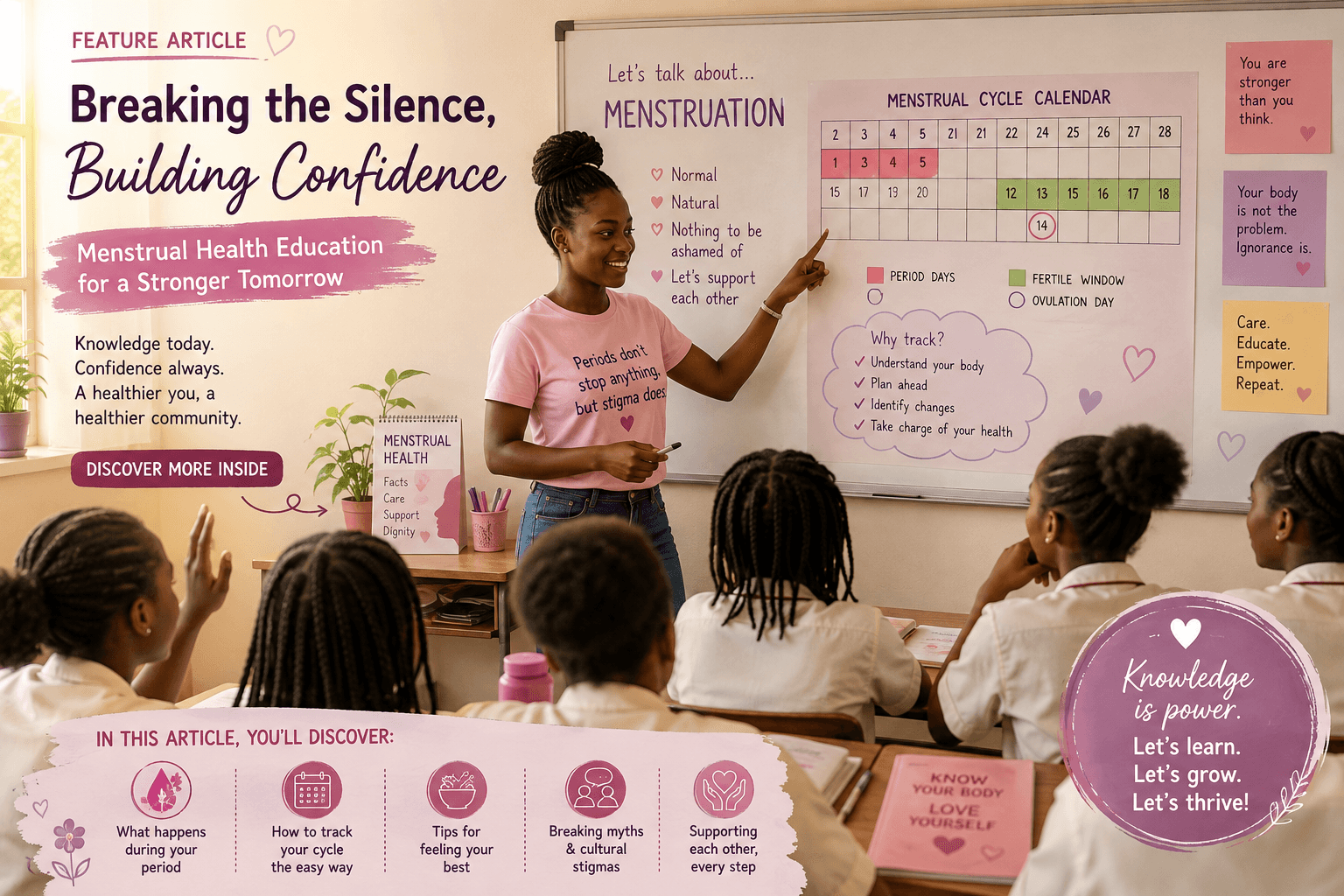
Menstruation, though a normal biological process, remains one of the main aspects of a young girl’s life that can come with so many challenges— challenges which she most times keeps hidden from those around her, including her parents, simply because she feels shy to talk about them. This silence can become even more difficult when she does not understand what is happening to her. At this point, she may feel frightened, confused or even believe something is wrong with her, if she is not given the right knowledge and support.
But what happens when the knowledge a young girl receives about menstruation focuses more on what she should fear than on what she should understand.
What Many Girls Say
Many girls have reported that all their parents tell them on that fateful day when they start menstruating is, “Beware, you can now get pregnant if a boy touches you”. They are also told to start bathing twice a day before being handed a packet of sanitary pads.
While these teachings are not necessarily wrong, they are not sufficient to help young girls understand and face the many challenges menstruation can come with— from managing pain and calculating cycles, to dealing with stigma and learning how to properly dispose of used pads. This lack of proper guidance may be one of the reasons why we sometimes see used sanitary pads carelessly discarded in garbage, along roadsides or in other public areas.
But the consequences of inadequate menstrual education do not end there. Many girls become shy, they hide their sanitary pads while going to the bathroom, feel embarrassed when blood stains their clothes or the bathroom, and silently endure menstrual pain and discomfort, instead of opening up to their guardians and asking for help.
So, what do young girls truly need at this time?
They need reassurance that menstruation is a normal biological process, and practical guidance on menstrual hygiene.
This includes changing sanitary pads regularly, keeping clean, washing their hands after changing a pad, carrying an extra pad when going out, and learning how to position, wrap, and dispose of used pads properly according to the waste system available in their community.
Managing pain
They should also learn how to manage menstrual pain, whether through a warm compress, appropriate medication recommended by a health professional, or seeking help and resting when the pain becomes difficult to manage, even while at school. With the right support, they can manage discomfort, return their attention to the classroom, and remain engaged in their lessons.
How About Stains
They should understand that stains can sometimes happen and that there is no need to feel ashamed or frustrated when they do. Instead, they can learn how to clean themselves, manage the situation calmly, and track their cycles to better prepare for their next period.
Most importantly, they should be aware that while menstrual cramps are common, but
severe or unusual pain should not simply be endured in silence. They should feel comfortable speaking up, asking for help, and seeking appropriate care when needed.
What can Parents, Friends, Siblings, Society and Public institutions do to support young girls?
Understanding menstruation should not end with the girl experiencing it. The people around her also need to understand what she may be going through, and how they can help. Parents should educate their children about menstruation before they begin, rather than keeping the information away from them in an attempt to protect their feelings.
Siblings can support their sisters by helping with chores and other activities when they are experiencing pain or discomfort. Friends can offer support at school or elsewhere, whether helping a friend who has experienced a stain, accompanying her to the bathroom or assisting with small errands.
Schools and other public institutions should provide clean, private, and suitable toilets where girls can manage their periods comfortably. Finally, society needs more open conversations and organisations that educate communities and help break the stigma surrounding menstruation.
In conclusion, menstruation can become a better experience for young girls if we all work together to give them the right knowledge and support, rather than leaving the whole burden on them. By educating, listening, and supporting them, we can help girls face menstruation with confidence instead of fear.
Comments
Sign in to join the conversation.
No comments yet. Be the first to share your thoughts.